


Tungsten Carbide Hardfacing for Stabilizer
Share with
Product Description
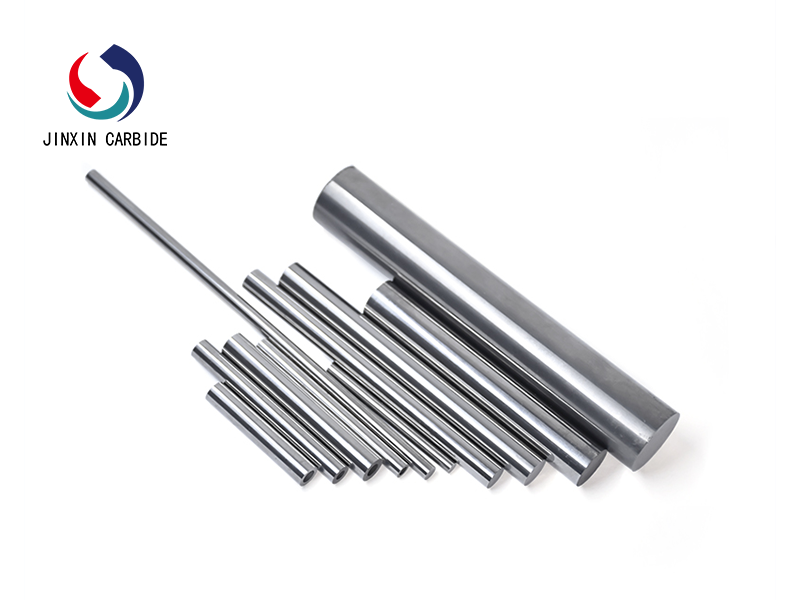
Tungsten carbide composite rod is a hardfacing material used to reinforce, protect, or repair metal parts that see heavy wear.
Think of it as a steel rod packed with extremely hard tungsten carbide particles.
What it’s made of
Tungsten carbide grains (very hard, wear-resistant)
Metal binder/matrix (usually steel, nickel, or copper-based alloy)
The carbide provides abrasion resistance; the metal matrix holds everything together and lets it bond to other metals.
What it’s used for
These rods are commonly melted or brazed onto surfaces to create a wear-resistant layer, especially where parts are exposed to:
Abrasion
Impact
Erosion
High friction
Typical applications:
Oil & gas tools (drill bits, stabilizers)
Mining equipment
Agricultural tools
Construction machinery
Cutting edges, blades, augers, crushers
Why people use it
Extremely wear resistant (much harder than steel)
Extends part life dramatically
Cost-effective repair vs replacing whole parts
Can be applied selectively only where wear occurs
How it’s applied
Brazing
Oxy-acetylene welding
TIG welding (depending on rod type and binder)
Important detail
The carbide size and percentage matter:
Larger carbides → better abrasion resistance, less impact tolerance
Smaller carbides → smoother finish, better impact resistance
Tungsten carbide tiles for a stabilizer are pre-formed wear-resistant blocks that are attached to a stabilizer body (most commonly in oil & gas drilling) to protect it from extreme

abrasion and erosion.
In simple terms: they’re armor plates for the stabilizer.
What they are
Solid tungsten carbide tiles (often rectangular or custom-shaped)
Sometimes cemented carbide (WC with cobalt or nickel binder)
Much harder than steel and highly wear-resistant
These tiles are brazed, welded, or mechanically fixed onto the stabilizer blades.
Why stabilizers need them
A drilling stabilizer:
Contacts the borehole wall constantly
Faces severe abrasion from rock, sand, and drilling fluids
Loses gauge quickly if unprotected
Tungsten carbide tiles:
Maintain gauge longer
Reduce wear and washout
Extend stabilizer life
Improve directional control while drilling
Tile vs composite rod (important difference)
Carbide tiles
Solid, uniform blocks
Longer life in severe abrasion
More expensive
Less tolerant to heavy impact if poorly supported
Composite rods
Carbide particles in metal matrix
Easier to apply and repair
Better for moderate wear or complex shapes
Common tile features
Flat or slightly curved to match blade profile
Grooved or textured backs for better bonding
Various thicknesses depending on formation hardness
Category:
Carbide hardfacing
Key word:
Carbide hardfacing
tungsten carbide tiles
tungsten carbide grit
Product consultation
Attention: Please leave your contact information, and our professionals will reach out to you as soon as possible!
Recommended products


Contact us
Phone:+86 133-9733-9096
Mailbox:13397339096@ojinxin.com
WhatsApp:+86 133-9733-9096
Address: Jiade Industrial Park, Zhuzhou City, Hunan Province, China
The inventory of anti-slip nails is in stock, along with the efficient development of diverse products and superior quality.
Navigation
Request a quote
Copyright © Zhuzhou Jinxin Cemented Carbide Group Co., Ltd
This site supports IPv4 and IPv6.
Powered bywww.300.cn Changsha

