



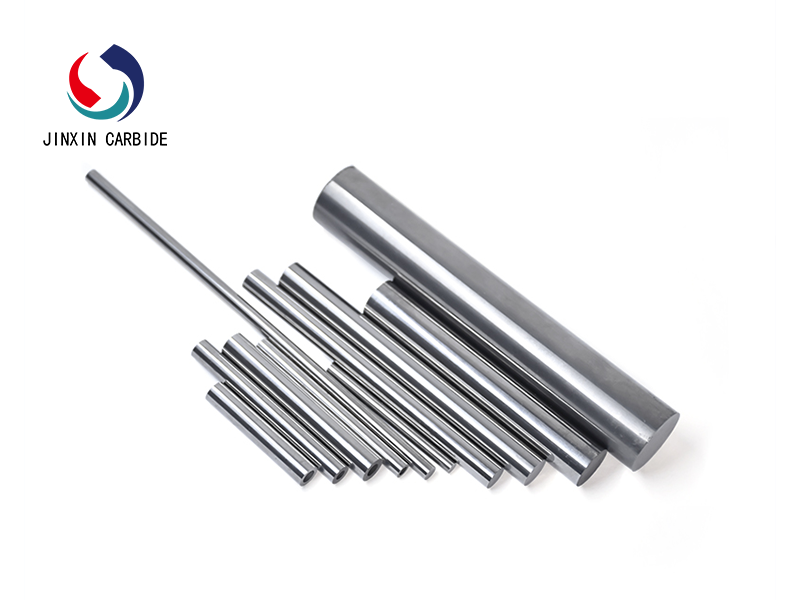
China Factory Tungsten Carbide Strips and Bar Zhuzhou Tungsten
Share with
Product Description
10 Reasons Why Carbide Plates Are Worth the Price
When purchasing carbide plates, the lowest price does not always mean the lowest cost. High-quality carbide plates can deliver longer service life, better wear resistance, higher dimensional accuracy, and lower overall operating costs.
Here are 10 key reasons why premium carbide plates are worth the investment.
1. Virgin Tungsten Carbide Raw Materials Come at a Premium
Carbide plates are primarily made from tungsten carbide (WC) and cobalt (Co), both high-value powder materials.
High-quality virgin raw materials offer higher purity and fewer impurities than recycled materials. Although they cost more, they provide more stable hardness, wear resistance, and service life, helping ensure consistent performance.
2. Not Just a Steel Plate—A Precision Powder Metallurgy Product
A carbide plate is not simply rolled or machined like a conventional steel plate.
It is manufactured through multiple precision processes, including:
Raw material batching → Ball milling → Pressing → Vacuum/low-pressure sintering → Precision grinding
Every stage requires specialized equipment, strict process control, and professional quality management. This complex manufacturing process is an important part of the product's value.


3. Exceptional Hardness and Wear Resistance
Carbide plates offer significantly higher hardness and wear resistance than conventional tool steels and wear-resistant steels.
They can withstand high-friction, high-impact, and demanding working conditions for extended periods and are widely used in:
- Stamping dies
- Cold heading dies
- Wear-resistant liners
- Woodworking tools
- Lithium battery slitting knives
- Other high-wear industrial components
Their superior wear resistance helps significantly reduce material consumption and replacement frequency.
4. Longer Service Life
Customers are not simply buying a piece of carbide plate—they are investing in a longer operating cycle.
For example, in certain applications:
Conventional steel plate: approximately 1 month
Carbide plate: 6–12 months or even longer
Although the initial purchase price is higher, the longer service life can significantly reduce annual replacement costs.
Actual service life depends on the application, working conditions, material grade, and operating parameters.
5. Less Downtime and Fewer Tool or Die Changes
Frequent replacement of dies or wear components can result in significant hidden costs, including:
- Machine downtime
- Labor for replacement
- Machine and die adjustment
- Production interruptions
- Fluctuations in yield and product quality
High-quality carbide plates can extend service intervals and help reduce these hidden production losses.
6. Extremely High Dimensional Accuracy
Premium carbide plates require strict control of:
- Thickness tolerance
- Flatness
- Parallelism
- Surface roughness
For demanding applications, dimensional tolerances can be as tight as ±0.01 mm or better, depending on the product specification.
Achieving this level of precision requires advanced grinding equipment, highly controlled processes, and comprehensive inspection—naturally increasing manufacturing costs.
7. Uniform Microstructure for Better Crack Resistance
Low-quality carbide plates may suffer from defects such as:
- Porosity
- Inclusions
- Non-uniform microstructure
- Edge chipping
- Cracking
High-quality carbide plates are manufactured with carefully controlled sintering processes and strict quality inspection.
A dense and uniform microstructure provides better mechanical stability and crack resistance, giving customers greater confidence during machining and use.
8. Better Machinability and Lower Scrap Rates
A uniform and consistent carbide structure can provide more stable performance during subsequent processing such as:
- Wire EDM
- Electrical discharge machining (EDM)
- Precision grinding
- Brazing and other joining processes
Better material consistency helps reduce the risk of cracking, deformation, and machining defects, which can lower the customer's own processing scrap rate.
9. Every Plate Is Subject to Strict Quality Inspection
Depending on the product specification and application, quality inspection may include:
- Hardness testing
- Density testing
- Metallographic analysis
- Ultrasonic or non-destructive testing
- Dimensional inspection
The customer receives a traceable and verifiable industrial material, rather than a product whose quality is left to chance.
10. The Real Savings Come from Total Cost
The most important question is not simply:
“How much does the carbide plate cost?”
It is:
“How much does it cost over its entire service life?”
A simple way to look at it is:
Total Cost = Purchase Cost + Replacement Cost + Downtime Cost + Scrap Cost + Labor Cost
A premium carbide plate may have a higher initial purchase price, but its longer service life, lower replacement frequency, reduced downtime, and more stable processing performance can result in a lower total cost of ownership (TCO).
The Real Value of Carbide Plates
Higher-quality carbide is not simply a higher-priced material. It is a long-term investment in performance, reliability, and production efficiency.
Virgin WC + Advanced Powder Metallurgy + Precision Grinding + Strict Quality Control = Consistent Quality and Lower Total Cost of Ownership.
Category:
Carbide Strips
Key word:
Tungsten carbide strip price
Tungsten carbide strip sizes
Tungsten carbide plate
Wolfarm
Tungsten
Product consultation
Attention: Please leave your contact information, and our professionals will reach out to you as soon as possible!
Recommended products


Contact us
Phone:+86 133-9733-9096
Mailbox:13397339096@ojinxin.com
WhatsApp:+86 133-9733-9096
Address: Jiade Industrial Park, Zhuzhou City, Hunan Province, China
The inventory of anti-slip nails is in stock, along with the efficient development of diverse products and superior quality.
Navigation
Request a quote
Copyright © Zhuzhou Jinxin Cemented Carbide Group Co., Ltd
This site supports IPv4 and IPv6.
Powered bywww.300.cn Changsha

