

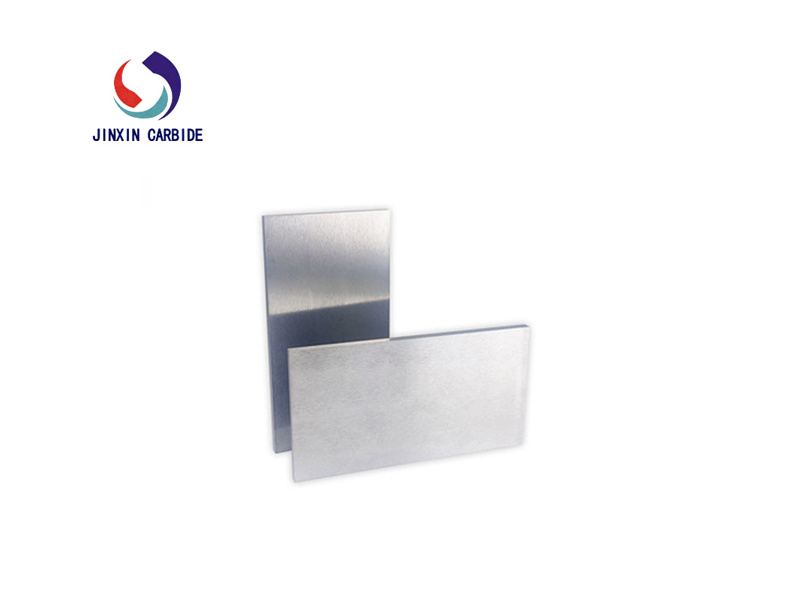
Tungsten alloy plate
Share with
Product Description
Product introduction
Tungsten alloy plates are made primarily from tungsten (W), with the addition of other metals such as nickel, iron, and copper to form an alloy.
Tungsten alloy plates can be used as counterweights in various fields, such as mechanical hammers, flywheels, counterweights for oil drilling platforms, and blade holders for weatherproofing tools; they can also be employed to manufacture X-ray target materials, collimators, nuclear fuel containers, and shielding for needles.
Product features
High density: the density typically ranges from 16.5 to 19.0 g/cm³—more than twice that of steel—making it suitable for applications requiring high weight and a compact design.
High strength and hardness: the tensile strength of the sintered high-density W-Ni-Fe alloy is 800–1000 MPa, and after processing, this strength can be increased to 1300–1500 MPa. Its hardness is several times greater than that of ordinary steel, and it exhibits excellent resistance to scratching and wear.
Good performance at high temperatures: tungsten has a melting point of up to 3410 ℃, and its alloy plates can maintain excellent performance and stability even at extremely high temperatures, without easily softening, deforming, or melting.
High corrosion resistance: after a special surface treatment, it can maintain excellent stability and durability in various acidic and alkaline environments.
High ray absorption capacity: the ray absorption capability is 30%-40% greater than that of lead, and its stability is also superior to lead, making it effectively suitable for radiation shielding.
Good electrical performance and thermal conductivity: it exhibits excellent electrical performance, along with superior conductivity, resistance to electrical corrosion, and high dielectric strength, as well as high thermal conductivity—and its linear expansion coefficient is only 1/2 to 1/3 that of iron or steel.
Areas of application
Military defense field: it is used to manufacture kinetic-energy piercing projectiles, bullets, rifles, missiles, and bombs, and can also be employed for counterweights and radiation shielding in military equipment.
Aerospace field: it can be used to manufacture aircraft engines, rocket nozzles, missile fins, and components for spacecraft.
Nuclear energy field: it is used to manufacture components for nuclear reactors and nuclear fuel elements designed to withstand radiation and high-temperature environments.
Industrial field: it can be used to manufacture extrusion molds, cutting tools, as well as chemical equipment, oil drilling tools, and more—leveraging its corrosion resistance and high strength.
Medical devices field: used to manufacture X-ray target materials and medical radiation shields.
Electronically conductive material: used in the manufacturing of electronic components, semiconductor devices, and optoelectronic devices as heat-dissipation components and electrode materials.
Sports equipment field: such as the manufacturing of professional darts and counterweights for golf clubs.
Product parameters
Brand
Type of alloy | 90W | 90W | 92.5W | 93W | 93W | 95W | 95W | 97W |
MIL-T-21014 | Class1 | Class1 | Class1 | - | - | Class3 | Class3 | Class4 |
SAE-AMS-T-21014 | Class1 | Class1 | Class2 | - | - | Class3 | Class3 | Class4 |
ASTM B777-87 | Class1 | Class1 | Class2 | - | - | Class3 | Class3 | Class4 |
Typical density | 17.1 | 17.1 | 17.5 | 17.6 | 17.6 | 18 | 18 | 18.5 |
Minimum creep resistance | 550-750 | 650–850 | 650–850 | 550–700 | 650–850 | 500-700 | 600–750 | 620-670 |
Elongation (%) | 8-15 | 20-25 | 18-24 | 5-10 | 5-20 | 3-5 | 8-13 | 2-5 |
Typical hardness | 24 | 25 | 26 | 26 | 26 | 27 | 27 | 28 |
Magnetic | No | Slightly | Slightly | No | Slightly | No | Slightly | Slightly |
Heat treatment | Sintering | Sintering | Sintering | Sintering | Sintering | Sintering | Sintering | Sintering |
Dimensions
Type | Length | Width | Thickness |
Tungsten alloy plate | 10-500 | 10-300 | 2-100 |
Category:
Tungsten Alloy
Tungsten Alloy Plate
Key word:
Product consultation
Attention: Please leave your contact information, and our professionals will reach out to you as soon as possible!
Recommended products


Contact us
Phone:+86 133-9733-9096
Mailbox:13397339096@ojinxin.com
WhatsApp:+86 133-9733-9096
Address: Jiade Industrial Park, Zhuzhou City, Hunan Province, China
The inventory of anti-slip nails is in stock, along with the efficient development of diverse products and superior quality.
Navigation
Request a quote
Copyright © Zhuzhou Jinxin Cemented Carbide Group Co., Ltd
This site supports IPv4 and IPv6.
Powered bywww.300.cn Changsha

