

Types of tungsten carbide rods
Publication date:
2025-10-22
Author:
Source:


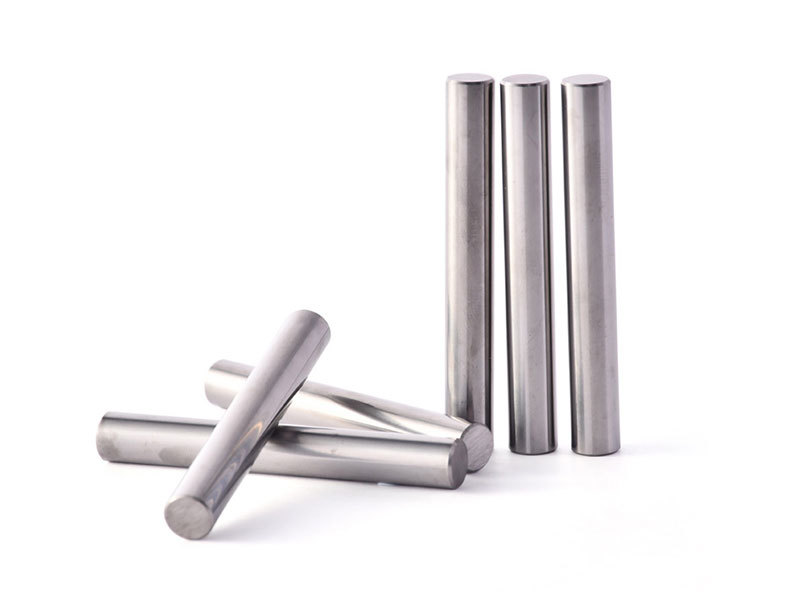
Tungsten carbide rods They are widely used in the manufacturing of cutting tools, such as milling cutters, drill bits, end mills, and other precision machining tools. They are also employed in the aerospace industry for cutting and machining tasks that demand high precision and durability. They are classified according to their characteristics and applications as follows:
1. According to standard sizes:
Tungsten carbide rods are available in various standard diameters, ranging from 1.0 mm to 25.4 mm, and in lengths of up to 330 mm—or they can be cut to specific lengths as needed.
Custom tungsten carbide rods are also manufactured with specific dimensions, including rods with a central hole or multiple straight holes to meet particular industrial needs.
2. According to the surface treatment:
Rustas: tungsten carbide rods without a specific surface finish that can be processed later.
Finished: tungsten carbide rods precision-ground to achieve a certain level of smoothness and accuracy.
Mirror-polished: tungsten carbide rods with a highly reflective and smooth surface, typically used for precision applications.
3. According to the function:
Solid tungsten carbide rods: Solid rods without an internal structure, suitable for a wide range of machining tasks.
Composite rods: Rods composed of tungsten carbide particles embedded in a metallic matrix with diverse properties.
Rods with coolant holes: Designed with holes that allow coolant flow during machining, thereby improving cutting efficiency and extending tool life.
4. According to the pressing method:
Molded carbide rods: The molding process involves pressing carbide rods using a die. The diameter is larger, typically up to 330 mm.
Tungsten carbide rod extrusion molding: Hydraulic or other pressure methods are used to extrude the powdered material through the extrusion die. The product length is not limited, and the longitudinal density is more uniform.
On the previous page:
Latest information

What is tungsten primarily used for?
2025-11-20

2025-11-18
What is the tungsten alloy grade?
2025-11-17
Contact us
Phone:+86 133-9733-9096
Mailbox:13397339096@ojinxin.com
WhatsApp:+86 133-9733-9096
Address: Jiade Industrial Park, Zhuzhou City, Hunan Province, China
The inventory of anti-slip nails is in stock, along with the efficient development of diverse products and superior quality.
Navigation
Request a quote
Copyright © Zhuzhou Jinxin Group Cemented Carbide Co., Ltd.
This site supports IPv4 and IPv6.
Powered bywww.300.cn Changsha